
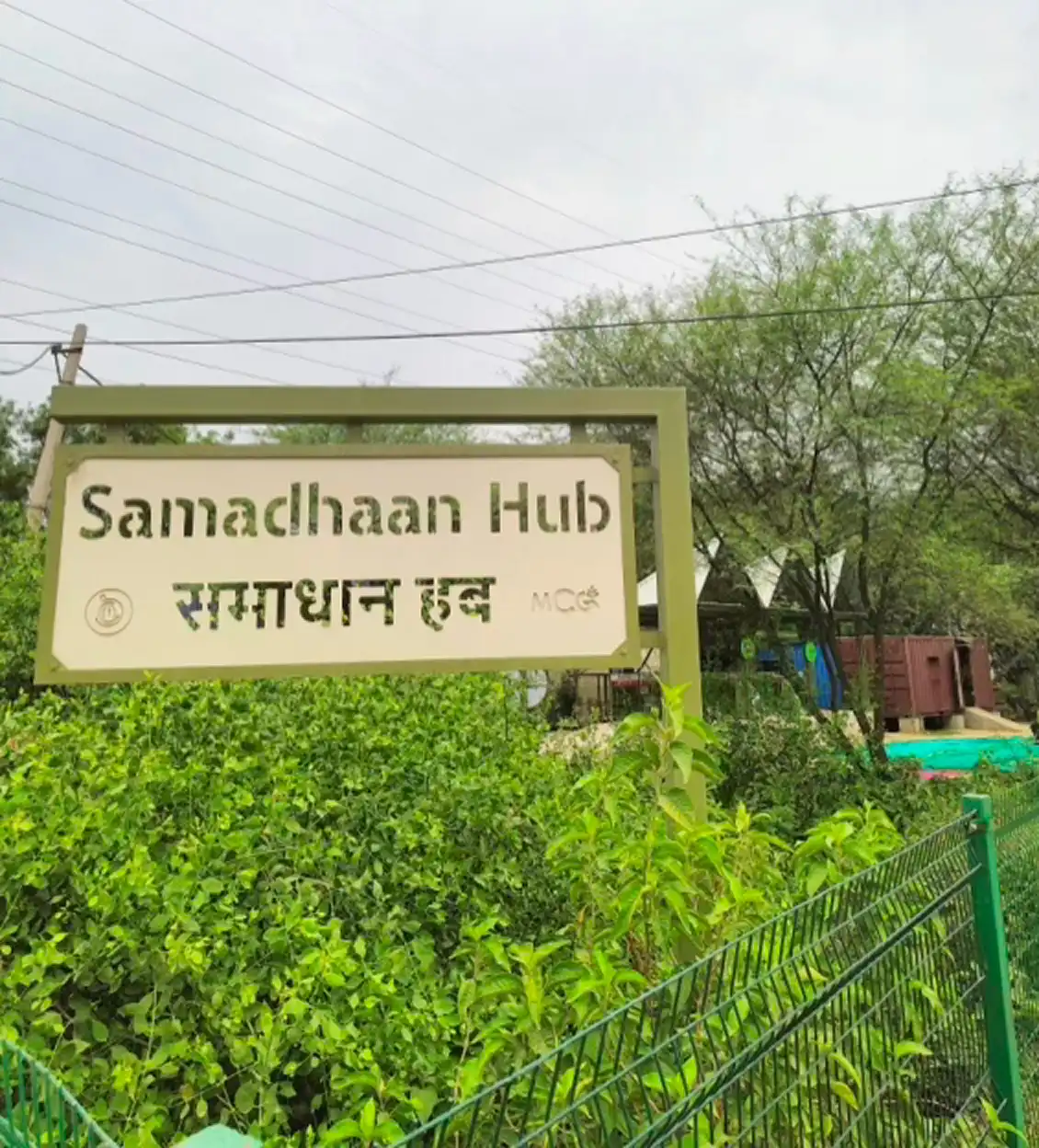
The Challenge: Gurugram's Waste Crisis
Gurugram generates enormous volumes of mixed waste every single day. The Bandhwari landfill — originally designed to handle around 1,200 tonnes per day — now receives far more, and has been pushed well beyond its capacity for years. Since the waste processing plant at Bandhwari became non-functional in 2013, over 3.5 million tonnes of legacy waste had accumulated at the site by 2021, causing severe land, water, and air pollution. Despite sustained efforts from environmental groups, NGOs, and the National Green Tribunal, the damage continues to affect the health of city residents and the surrounding ecology.
The numbers tell a sobering story:
• 75% of Gurugram's waste ends up in landfills
• Only 9% is currently recycled or composted
• Just 18% of households practise waste segregation at source
Almost 30% of what residents discard is actually a recyclable resource — material that, with the right systems in place, never needs to reach a landfill. Incineration is not the answer either: burning mixed waste produces toxic pollutants that degrade air quality and harm human health.
The core problem is twofold: most residents are still unaware of waste segregation practices and the zero-waste philosophy — and even those who want to do the right thing have nowhere to go. There are no accessible, community-level spaces where citizens can learn, segregate, and responsibly dispose of their dry waste and divert them going to landfill.
How the Samadhaan Hub Was Born
iamgurgaon has been working on ecological restoration in Gurugram since 2009. Over time, the organisation recognised that waste was not just an environmental problem — it was a civic one, rooted in the broken link between residents who wanted to do the right thing and the responsible recyclers who could handle their waste.
Early campaigns helped shift the conversation. Bring Your Own Bag (2016) reduced single-use plastic in local markets. The public art installation Where Does It Go? (2019) confronted residents with the hidden journey of their discarded waste. But awareness alone was not enough.
What was needed was a solution centre — a physical hub — where citizens could actually do something with their segregated waste.
In 2020, iamgurgaon opened the first Samadhaan Hub: a decentralised dry waste collection centre built inside a green restoration site in DLF Phase 1.A place for citizen to bring their dry waste, sorting, learn and feel proud to do the right thing.
The name says it all. Samadhaan means solution. Each hub is designed not merely as a drop-off point, but as an education and community space — where residents, school children, and corporate volunteers can learn about the circular economy, see how their waste is processed, and witness the real-world impact of their choices.
What Every Samadhaan Hub Offers
All five hubs share a common set of services and facilities while Mandir unit only collects sacred waste
• Segregated collection points for Eight dry waste streams: Paper, Cardboard, 4 Different type of Plastic (PET, Rigid, Soft and MLP), E-waste, Glass, Metals, Textile, Medicines.
• Linkage to verified recycling and upcycling partners including NAMO (e-waste), Avacayam (soft plastics, MLP and Teracotta), Ananda Vrinda (Horticulture), Goonj and Respun (textiles), and 3RZero for glass, metal, and Hard Plastics.
• A reward for every responsible citizen — 10 kg of dry waste, 15 kg of books or drop off 25 kg of textile waste and receive a free reusable canvas bag.
• Educational displays explaining the waste crisis, why recycling is important and what the circular economy means in practice and advocacy
• Workshops and awareness sessions for residents, schoolchildren, and corporate groups
Process of Waste Collection
1. People bring their segregated waste to the Samadhaan Hubs.
2. Our staff assists them in weighing the waste to measure the amount diverted from landfills.
3. The participant's details and the weight of the collected waste are recorded in the register.
4. If the waste includes any communicative e-waste, the citizen will receive a filled challan as proof that the device has been handed over for recycling with the consent of the giver.
5. Individuals then deposit their waste into the respective collection bins, encouraging the practice of proper waste segregation.
6. If the collected weight meets the reward criteria, the participant receives a free reusable canvas bag as an incentive.
7. And finally the waste is transferred to respective recycler.
Samadhaan Hub is open 7 days a week (except national holidays) | 8 AM to 5 PM
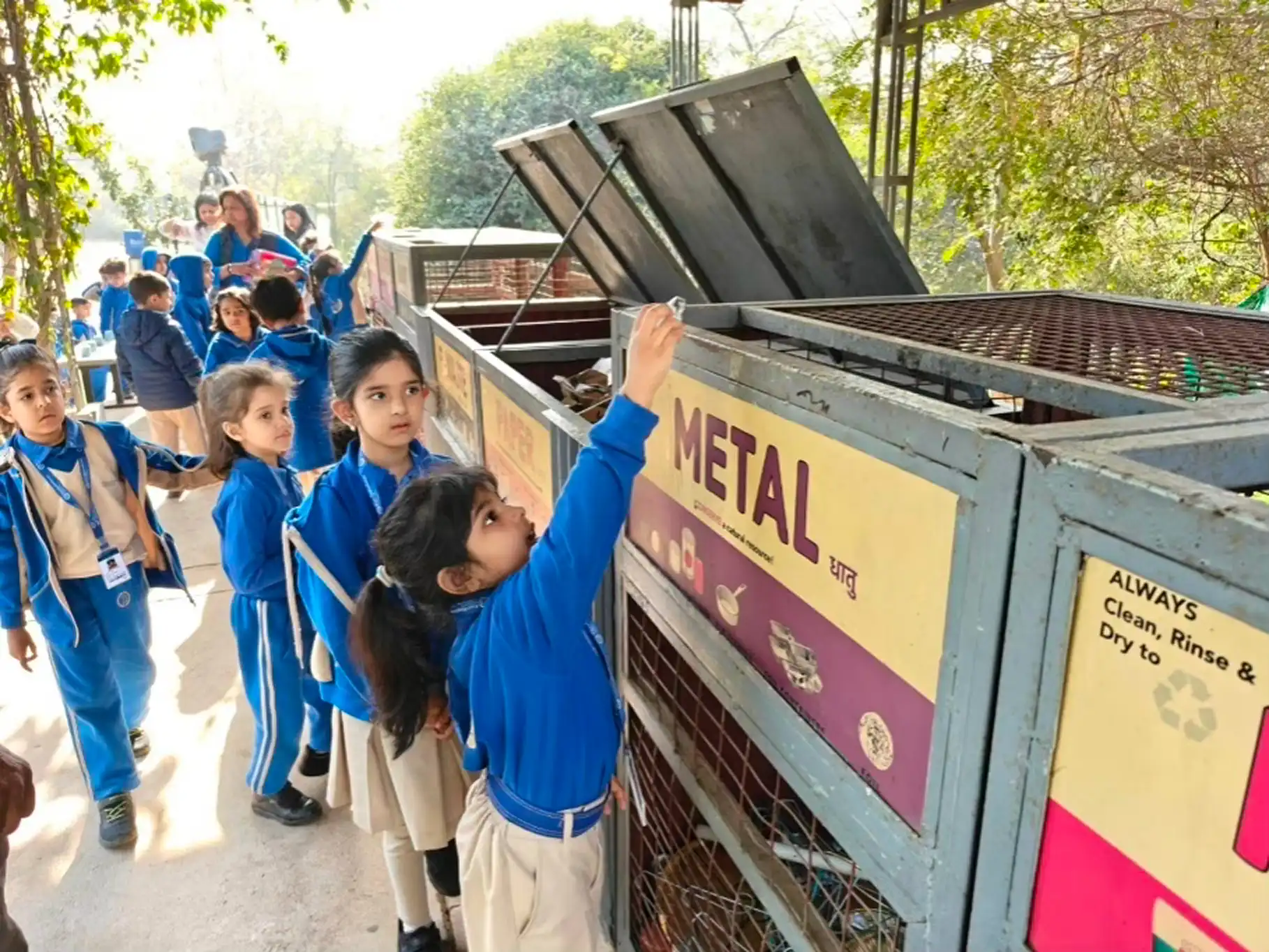
Recycling and Partner Network
Every kilogram of waste collected at the Samadhaan Hubs is channelled through a carefully chosen network of verified, responsible partners. Each partner is selected for the quality of their recycling process and the additional social impact they create
1. NAMO — India's largest authorised e-waste recycler, certified by the Central Pollution Control Board. Uses zero-waste discharge technology; repairable items are refurbished, while non-repairable ones are dismantled and responsibly processed.
2. Avacayam — a social enterprise run by people with special needs that upcycles soft and multi-layered plastics into gift products, planters, bags, and mats.Ananda Vrinda — converts flower waste from religious offerings into incense sticks and natural Holi colours.
3. Goonj — distributes donated clothes, toys, and essential items to underserved communities across India. Mata ki Chunris are upcycled into bridal lehengas.
4. 3R Zero Waste — a leading CPCB-approved body that processes plastics into reusable resource material.
5. Government-approved incinerators handle expired medicines; non-expired medicines are donated to charitable dispensaries. 6. Respun – Respun is India's first clothes recycling service which helps in Eliminating textile waste from landfills and recycle them into new fibres and textile.
The Impact So Far
Since the first hub opened in 2020, the network has grown to six locations across Gurugram. The results speak for themselves:
• 7.85 lakh+ kg of dry waste diverted from landfill till July 2026
• 30,000+ Households engaged across the city
• School, RWA and corporate engagement through various campaigns and volunteer programmes.
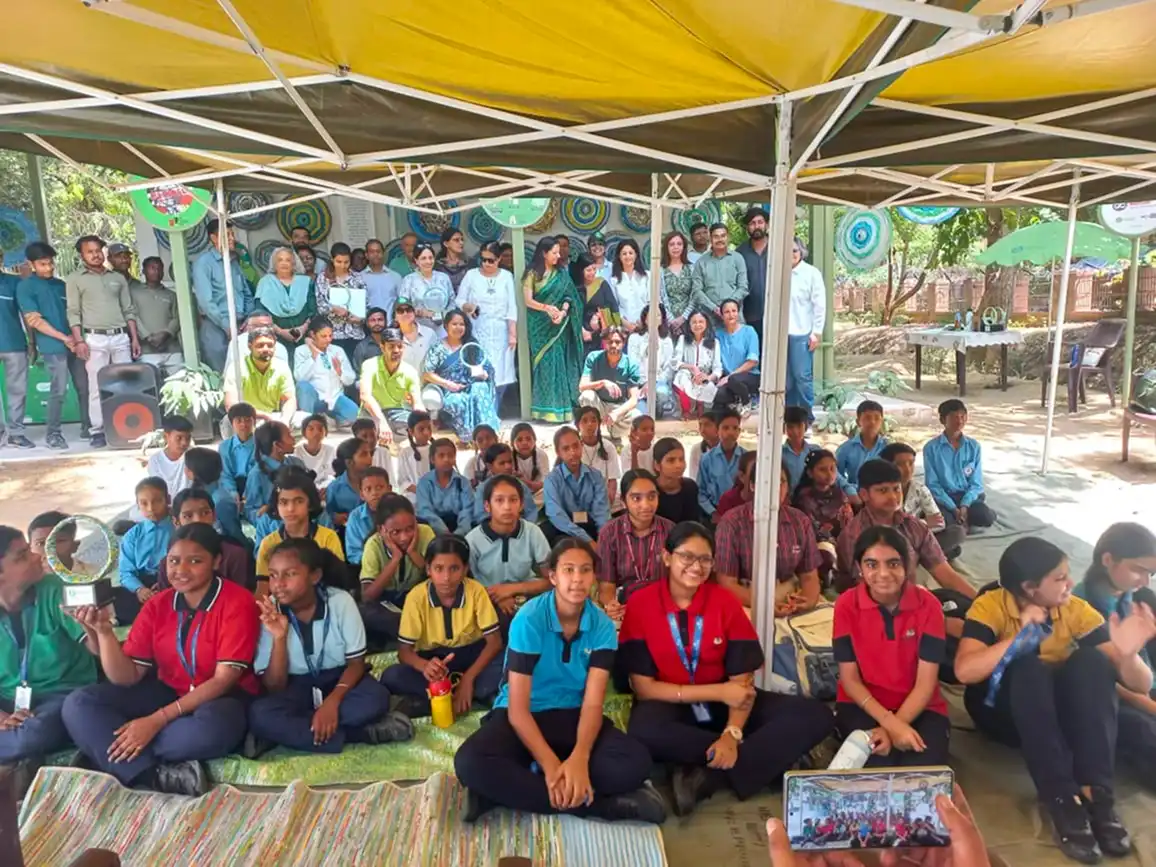
Schools Visit to Samadhaan Hub
Delegates Visit
In 2023, delegates from 27 countries visited Gurugram as part of the G20 summit and made a special visit to the Samadhaan Hub — which was presented as a model of community-driven, decentralised waste management. The hub has also been featured as a case study by the India Leaders for Social Sector (ILSS), recognising it as a replicable model for sustainable urban development.
Each hub functions as a multi-purpose space. Along with dry waste collection, it hosts workshops on segregation, educational displays on the circular economy for citizens and RWAs, school outreach programmes, and corporate employee engagement events. All waste is channelled to verified, responsible partners — ensuring every material is treated as a resource, never a burden.
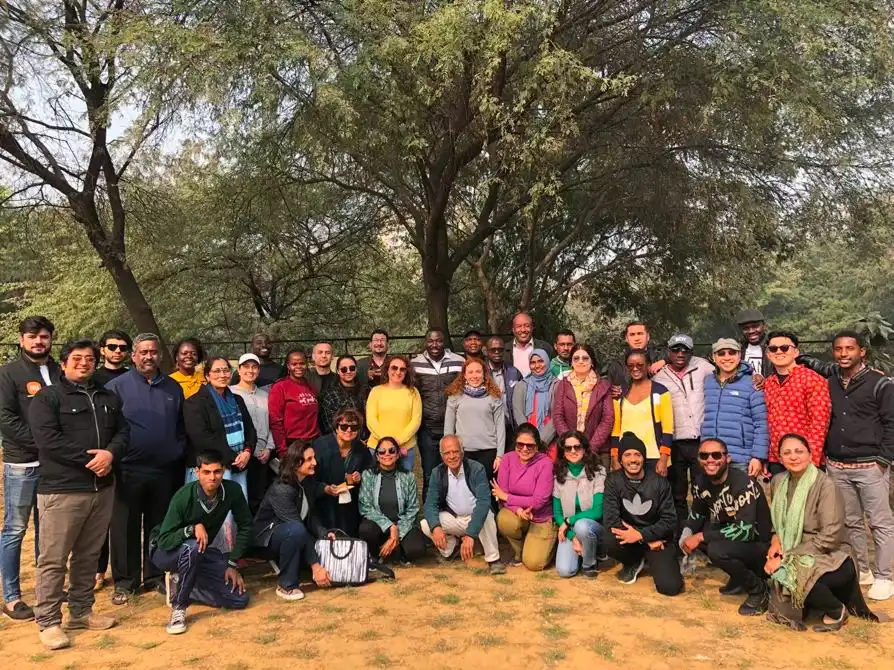
G20 Delegates at Samadhaan Hub
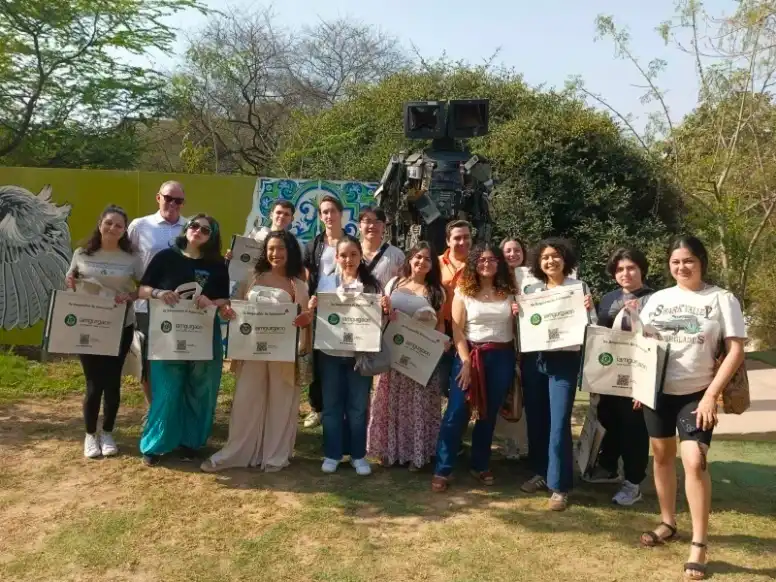
Florida University visit
The goal is a zero-waste future for Gurugram — one neighbourhood at a time.
Get Involved
Join the movement, Find your nearest Samadhaan Hub and bring your segregated dry waste or Organise a drive with your colony, school, or company. Partner with us to expand the network further.
GET IN TOUCH : info@iamgurgaon.org
IAG Samadhan Hub Drop-off Locations:
1. Khusboo Chowk Samadhaan Hub - Block D, Sector 26A
https://goo.gl/maps/AX7mtkbWGqqTkgEt7
2. Prachin Hanuman and Shani Dev Mandir – Off Sunset Boulevard road
https://maps.app.goo.gl/p1zFN9Q3dw1JB6bHA?g_st=ic
3. Creek 4 Samadhaan Hub Sector 56 - (near Metro Pillar 226), Opp. Early Years Pathway school
https://maps.app.goo.gl/aVK1GWX4pKCSV66TA?g_st=ic
4. Creek 4 Samadhaan Hub Sushant Lok 2 — near Kendriya Vihar Society, Sector 56
https://maps.google.com/?q=28.421234,77.095596
5. Badshahpur Forest Corridor Samadhaan Hub — South Peripheral road, Near Tatvam Villas, Dhani, Sector 69
https://goo.gl/maps/A68sbKouCb3ziVMV9
6. Sector 48 Recycling Unit,Badshahpur ,Near GD Goenka School, Gurugram
https://maps.app.goo.gl/SoxtNjuagH41ZUwV6
The Six Samadhaan Hubs
iamgurgaon operates six decentralised dry waste collection centres across Gurugram. Each hub is strategically placed within a neighbourhood or active ecological restoration site — making responsible disposal easy, visible, and meaningful. Together they form a city-wide network for dry waste diversion, education, and community action. Gurugram is home to over 1 million residents, and this network is built to serve them.

Samadhaan Hub Phase 1
Waste is a looming problem that threatens to poison every aspect of our lives from the air we breathe to the water we drink, and the soil we rely on. We consume without a thought, carelessly discarding our possessions, never pausing to consider the fate of our trash. But where does it all go? The city of Gurgaon alone sends out 220 truckloads of garbage every day, and our landfills are teetering on the brink of collapse.

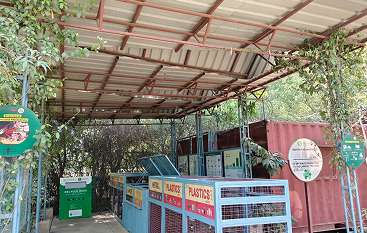
Badshahpur Samadhaan Hub Sector 69
water we drink, and the soil that feeds us. In Gurgaon alone, 220 truckloads of garbage are sent out every single day. Our landfills are overflowing. Our environment is suffocating.
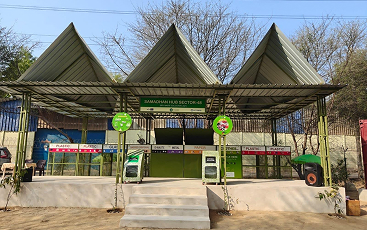
Badshahpur Samadhaan Hub Sector 48
water we drink, and the soil that feeds us. In Gurgaon alone, 220 truckloads of garbage are sent out every single day. Our landfills are overflowing. Our environment is suffocating.
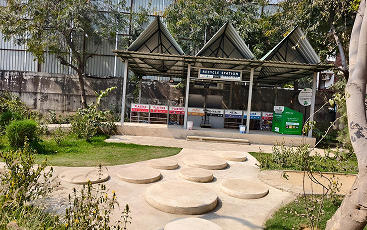
Creek 56 Samadhaan Hub
Waste is no longer just a by-product of consumption - it’s a crisis threatening the very air we breathe, the water we drink, and the soil that feeds us. In Gurgaon alone, 220 truckloads of garbage are sent out every single day. Our landfills are overflowing. Our environment is suffocating.

Creek 56 Samadhaan Hub Sushant Lok 2
Waste is no longer just a by-product of consumption - it’s a crisis threatening the very air we breathe, the water we drink, and the soil that feeds us. In Gurgaon alone, 220 truckloads of garbage are sent out every single day. Our landfills are overflowing. Our environment is suffocating.

Mandir Samadhaan Hub
Waste is no longer just a by-product of consumption - it’s a crisis threatening the very air we breathe, the water we drink, and the soil that feeds us. In Gurgaon alone, 220 truckloads of garbage are sent out every single day. Our landfills are overflowing. Our environment is suffocating.